The Architect of
Solidified Knowledge.
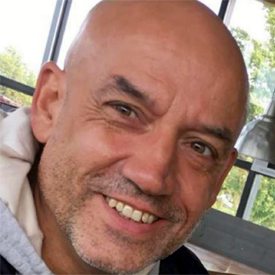
I’m Tom Neijman — a software developer with a mathematics background, working at the intersection of creative coding, AI systems, and durable digital artefacts. I like building things that are both rigorous and poetic: systems that you can inspect, reproduce, and keep — not just consume.
We are rapidly approaching the event horizon of the technological singularity. In an age where AI generates infinite streams of fleeting content, I position my work as a counter-movement to this volatility.
// 01. Research Direction
I explore the boundary between the digital and the biological, and I treat “storage” as a cultural problem—not only a technical one.
A guiding question runs through my work: How do we make human knowledge and culture survivable—independent of platforms, business models, and short-lived formats?
Projects like DNA (C)ODE come out of that question: translating digital imagery into synthetic DNA sequences, using biology’s most time-tested medium as a conceptual (and potentially physical) archive.
// 02. Systems for Digital Heritage
Alongside the artistic work, I build practical infrastructure for long-term digital survival. With the Stoutenburger Almanac, I develop an “Atomic Web” approach: self-contained HTML artefacts that can live without servers, databases, or complex dependencies.
The idea is simple: if the URL is the interface, the artefact should also be the archive. Portable, inspectable, and resilient.
// 03. Applied AI & Agentic Workflows
I’m also interested in how organizations can move beyond “digitization” toward systems that actually execute intent.
That work translates into AI agent infrastructure: encoding workflows and business logic into independent agents that can operate reliably, audibly, and at machine speed—while remaining understandable to humans.
In all of it—bio-art, web primitives, or agents—the goal is the same: turn fragile streams into stable artefacts.